How it works
Quick questions
Future-built
What is Zideons?
Zideons is a platform for exploring practical AI-powered tools.
Our apps showcase how modern AI systems can generate content, automate workflows, and help people make faster decisions.
Visitors can try real AI applications, learn how the technology works, and discover new capabilities shaping the future of intelligent software.
AI at work
Behind the AI
How it works
Quick questions
Next up
The Zideons Platform
Tools like Z-TTS generate natural speech from text, Zavorium helps create recipes and blog-style content with AI, and BookBuildR (coming soon) turns prompts into illustrated books and stories.
As the platform expands, Zideons will continue to introduce new applications that demonstrate how modern AI systems can assist creativity, automation, and problem solving. Explore the apps below to see these capabilities in action.
AI web apps built for real use
The technologies explained above power the next generation of AI tools.
Explore how these capabilities come together in real applications.
SEE AI IN ACTION
You've seen how modern AI systems work.
Now explore how these technologies come together in real applications.
Launchpad
Why AI
FAQ
AI tools can assist with writing, research, summarization, content generation, automation, and data analysis.
AI models generate responses based on patterns in data and may occasionally produce incorrect or outdated information.
Most AI systems work best when combined with human judgment and oversight.
AI Horizon
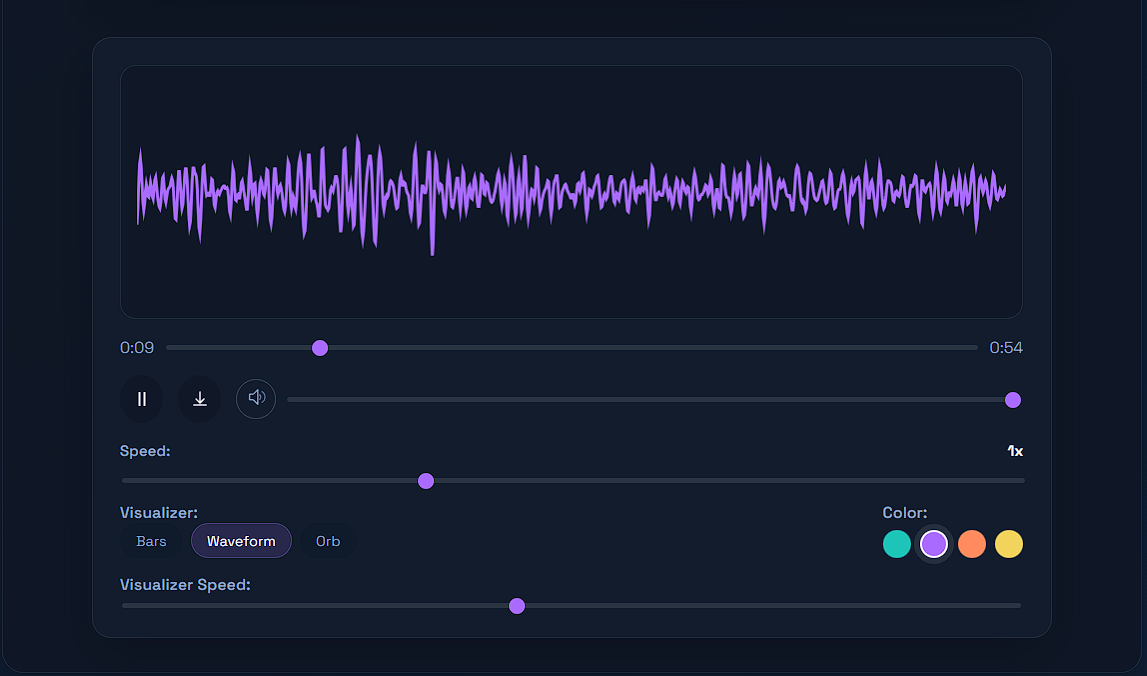
Text-to-Speech converts written content into natural-sounding spoken audio. It is commonly used for narration, accessibility, and voice-enabled product experiences.
Speech Recognition converts spoken audio into text for transcription and search. Teams use it for captions, meeting notes, and voice-driven workflows.
Retrieval-Augmented Generation combines document search with language generation to produce grounded answers. It improves factual reliability by referencing trusted sources.
Image generation models create visuals from text prompts and style guidance. This helps teams prototype concepts, campaign assets, and creative variations quickly.
Summarization condenses long documents into concise takeaways. It helps decision-makers review reports, transcripts, and research faster.
Workflow agents coordinate multiple AI and software steps to complete complex tasks automatically. They can route data, trigger actions, and keep processes consistent.
Classification and tagging assign categories or labels to content and records. This supports moderation, routing, analytics, and large-scale organization.
Recommendation systems suggest relevant items based on behavior, context, or similarity. They improve discovery across content, products, and user journeys.
Natural Language Understanding extracts meaning, intent, and entities from text. It powers smarter search, assistants, and automation flows that rely on language input.